HotSeat — Full Project Documentation
Consolidated design, build, testing, and review artifacts from OKAA Solutions (Team 5).
Public spaces such as libraries experience seating shortages; the Carmel Clay Public Library reported high demand with survey feedback indicating frequent difficulty finding seats. HotSeat addresses this by using a camera-based occupancy system to provide users with timely seat-availability information.
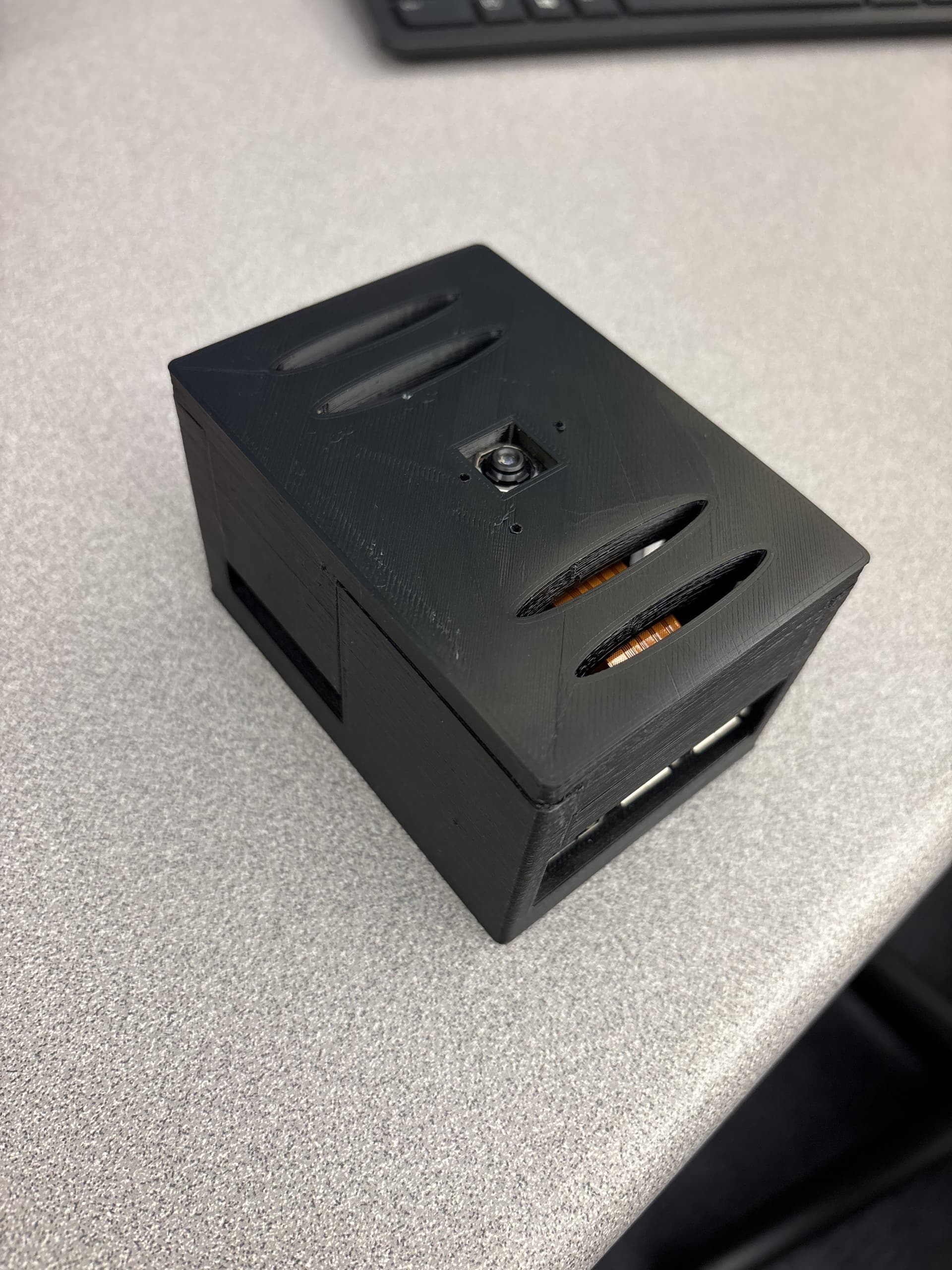
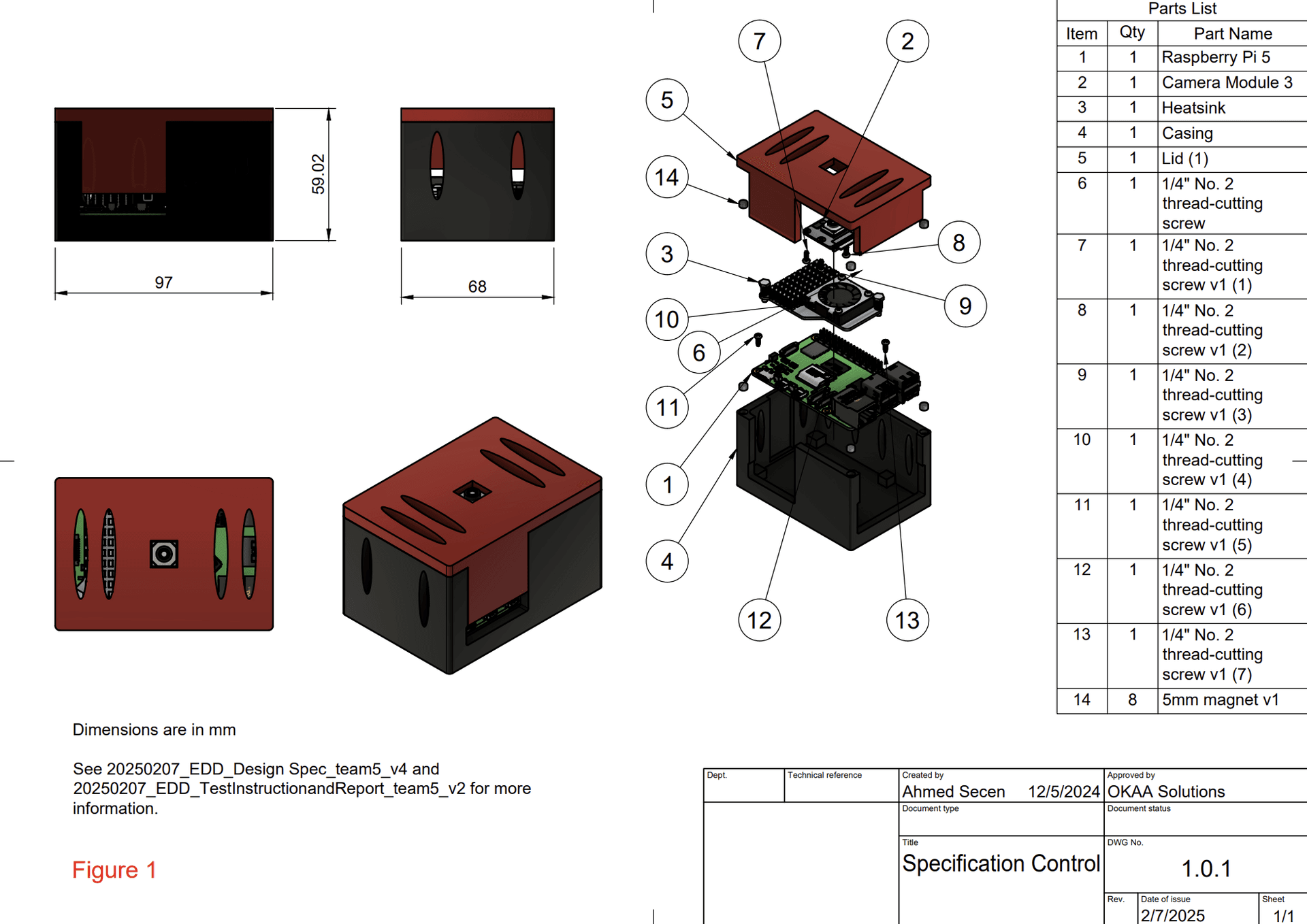
Requirements and Performance
- • PETG 3D-printed housing
- • Total hardware mass target ≤ 200 g
- • Housing envelope target: 97±3 mm × 67±3 mm × 59±3 mm
- • Detect chair occupancy at 15 ft range
- • Max response time target: 10,000 ms
- • Detect at least 2 occupants with ±1 accuracy
- • Powered by wired 5.1V, 5A supply
- • Semi-permanent wall mounting via self-tapping screws
- • Mounting system designed for 3+ year service life
- • Operating range: 30–130°F at 0–50% humidity
- • MTBF target: at least one week
- • Sustainability target: <2 kWh/month energy use
- • Maintainability: remote updates over WiFi and accessible hardware service
- • Aesthetics: filleted rectangular housing and minimalist web interface
- • Material constraints: non-toxic, UV-resistant, waterproof PETG
Build and Assembly Documentation
• Device is intended for adult installation and handling.
• Avoid drill-based over-torque on casing screws to prevent breakage.
• Keep water away from electrical components during installation and operation.
• Required tools include screwdriver, ruler, scale, and a diagnostics-capable computer.
- • 5 mm × 2.5 mm circular magnets (8)
- • PETG case and lid (97 × 68 × 53 mm body envelope)
- • Raspberry Pi 5 (8GB)
- • Raspberry Pi 5 Active Cooler
- • Raspberry Pi Camera Module 3 NoIR (12MP)
- • 22-pin to 15-pin Raspberry Pi camera cable (200 mm)
- • 0.25 in thread-cutting self-tapping screws (8)
- • USB-C wall power supply and USB cable
Testing and Validation
1. Prepare stable test area with power and computer access.
2. Install software, power the device, and place chairs in camera view.
3. Run analysis from the UI and log outcomes against pass/fail criteria.
4. Execute verification procedures across mechanical, electrical, software, and environmental criteria.
- • Range: passed at 18 ft against the 15 ft requirement
- • Average response time: 5,346 ms (within the 10,000 ms requirement)
- • Occupancy: accurately analyzed up to 3 chairs
- • Power: stable operation on single 5.1V, 5A supply
- • Mounting: passed 30-day mount test and simulated extended wear
- • Environmental and manufacturability checks: all listed criteria marked PASS
Critical Design Review Carousel
Open Full CDR PDF- • Project Manager: Kelly Fulk
- • Systems Engineer: Olivia Hart
- • Hardware Engineer: Abram Weller
- • Software Engineer: Ahmed Secen
Referenced Standards and Sources
Documentation references include eCFR 40 CFR 761.20, ISO 10878:2013, ISO 18434-1:2008, Adafruit technical specifications, PETG material references, and related reliability/safety sources captured in each document’s references chapter.